
A Conversation with Lila Nordstrom ’02 on Advocacy, Resilience, and Community
For Lila Nordstrom ’02, Stuyvesant has always been more than a high school. It was where she found her closest friends, where working hard was celebrated, and where her life’s most unexpected journey began: advocating for the health and wellbeing of 9/11 survivors.
Like many of her classmates, Lila was at Stuyvesant on September 11, 2001. In the years that followed, as evidence mounted of long-term health risks for students, staff, and downtown residents, she found herself stepping into a role that few others were prepared to take on: speaking out, organizing, and advocating for care.
“I didn’t think of myself as an activist at the time,” she recalls. “But it became clear that someone had to connect the dots between what we were seeing in our community and what lawmakers in Washington were ignoring.”
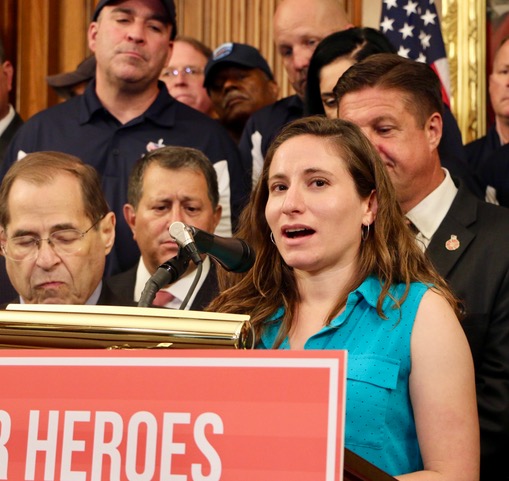
After graduating from Vassar College in 2006, Lila co-founded StuyHealth, a nonprofit dedicated to connecting former students, young people, and community members exposed to toxins downtown with the resources and care they deserve. Alongside fellow alum Amit Friedlander ’02 she launched StuyHealth at a time when few were talking about the long-term health effects of the attacks on young survivors.
“It started small — really just trying to find each other, to make sure people knew what programs existed and how to get care,” she explains. “But as soon as we started talking to elected officials, we realized how big the need was.”
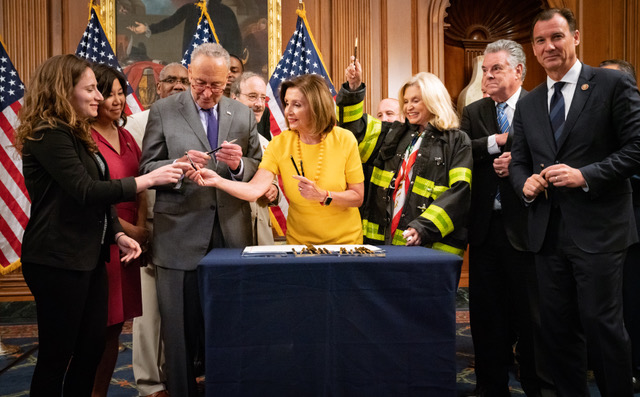
Their work played a critical role in raising awareness around the James Zadroga 9/11 Health and Compensation Act, which established the World Trade Center (WTC) Health Program — a federally funded program providing monitoring and treatment for 9/11-related illnesses.
Advocacy doesn’t end with one bill or one program. It’s ongoing. But the Stuyvesant community has always risen to a challenge. I believe we can do it again. — Lila Nordstrom ’02
While developing a career in film and television in Los Angeles, Lila continued to balance creative work with organizing. That dual path eventually led her into political communications, where her advocacy and legislative knowledge translated into a new professional focus. But the fight hasn’t gotten easier. The renewal of the Zadroga Act in 2019 was hard-won, and today, Lila warns of continued threats to federal funding. The dismantling of public health infrastructure during the current administration has made the future of the WTC Health Program uncertain. “Advocacy never ends,” she notes. “We have to remind representatives outside of New York that this program serves their districts, too.”
Despite the challenges, Lila emphasizes the rewards: ensuring care for thousands of survivors, and watching the model created for 9/11 inspire similar health programs for other disaster-affected communities. Looking ahead, Lila is working on expanding StuyHealth’s outreach, particularly around major anniversaries of 9/11, and strengthening ties with partner schools and organizations downtown. She recently sat down with SHSAA Executive Director, Diego Segalini ’98, to discuss ways our Alumni Association can help amplify this work — from social media campaigns to community events that spotlight survivor stories and bring policymakers into the conversation.
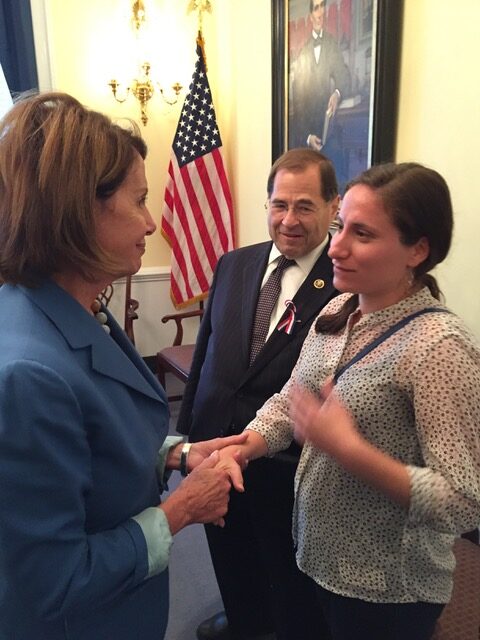
For Lila, one of the biggest challenges is sustaining federal support. The WTC Health Program has provided essential care for thousands of responders, survivors, and students — but it requires consistent reauthorization and funding. “Advocacy never ends,” she emphasizes. “The program is still vulnerable. And with the dismantling of public health infrastructure at agencies like National Institute for Occupational Safety and Health (NIOSH) and even the Centers for Disease Control and Prevention (CDC), there’s a real danger of losing ground.”
That makes it critical, she argues, to frame the issue nationally. “This isn’t just about New Yorkers. People from every state were in Lower Manhattan that day — and many of them are sick now. If you can show a representative from Ohio or Texas that their constituents are affected, you get their attention.”
Looking ahead, Lila is working to strengthen StuyHealth’s infrastructure, expand its digital presence, and reach more alumni. The organization recently rebranded its Instagram account and is experimenting with social media as a tool to connect survivors with resources. “Our audience is there — but breaking through without advertising dollars is tough. That’s where partnerships can make a real difference.”
One opportunity she’s particularly excited about is collaborating with the Stuyvesant High School Alumni Association (SHSAA). Together, she and Diego discussed ways to co-host events, amplify StuyHealth’s message through alumni channels, and bring in speakers — including authors and policymakers — to engage the broader community.
“We want to tell a fuller story,” she explains. “Not just Stuyvesant’s, but also the experiences of other downtown schools that were affected. There’s power in showing this wasn’t just one community’s problem.”
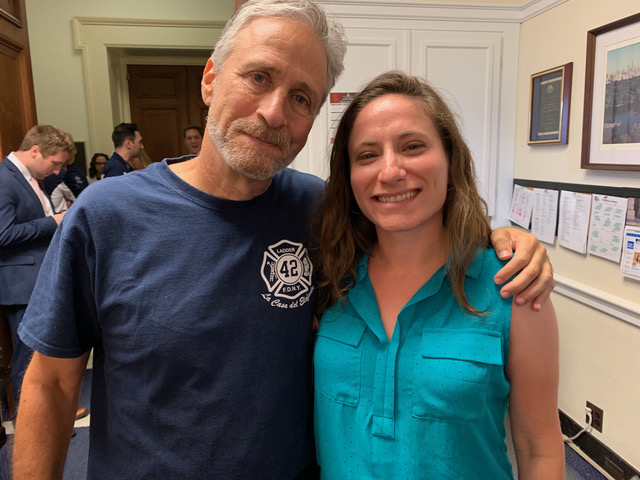
Reflecting on her time at Stuyvesant, Lila recalls the intensity of the environment, but also the sense of belonging that shaped her confidence. “The support of our classmates was everything,” she said. “That foundation helped me do the work I do today.” The friendships she formed at Stuy remain central to her life. For Lila, her advocacy is inseparable from her experience at Stuyvesant. “It was the first place where it was cool to try hard, where being smart wasn’t something to hide. At Stuy, being ambitious and speaking up wasn’t a liability. It was part of who we were.”
As another anniversary of 9/11 comes and goes, Lila is preparing for another season of advocacy. StuyHealth will be organizing events, pushing out resources online, and reminding lawmakers why continued support is essential. She hopes more alumni will join her in amplifying the message. “So many people don’t even know they qualify for the World Trade Center Health Program. Just spreading the word can save lives.”
And she knows the fight is far from over. “Advocacy doesn’t end with one bill or one program. It’s ongoing. But the Stuyvesant community has always risen to a challenge. I believe we can do it again.”
──────────────────────────────────────────
Are you a Stuyvesant alum that was near the World Trade Center on 9/11 or in the weeks that followed? If so, please consider registering for the World Trade Center (WTC) Health Program. Learn more at www.stuyhealth.org or by contacting [email protected].