
110 Years of Student Representation: The Evolution of Student Government at Stuy
When Stuyvesant High School opened its doors in 1904, it was a very different institution from the one we know today—an all-boys manual training school where student leadership was informal, loosely organized, and largely overseen by faculty. But by 1915, the students’ desire for a stronger and more representative voice could no longer be contained.
That year’s Indicator describes the moment vividly: “Many moons ago, there were wild rumors floating about the school to the effect that we were soon to have a G.O.” Those rumors “went to the place where all dead ones go,” only to be resurrected in late 1914 with the backing of mathematics teachers Mr. Corbett and Mr. Cornell. A mass meeting was held—complete with “budding Daniel Websters”—to persuade Principal von Nardroff that Stuyvesant needed a General Organization (G.O.). Their arguments succeeded.
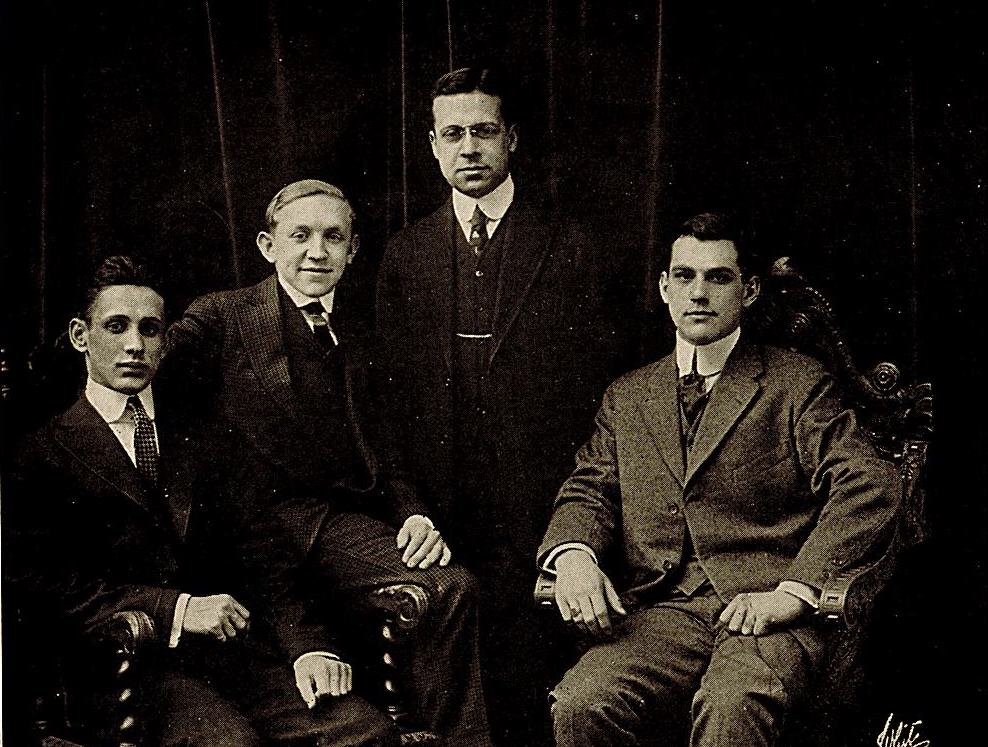
The newly formed G.O. (President Henry T. Samson ’15, Vice-President James Sinclair ’15, and Secretary Benjamin Finkelstein ’15) brought every club under one structure, introduced nominating conventions, and established a Board of Governors, which acted as the Senate, comprised of the Principal, Mr. Corbett, and Mr. Bedford of the Biology Department. It was Stuyvesant’s first formal experiment in student democracy.
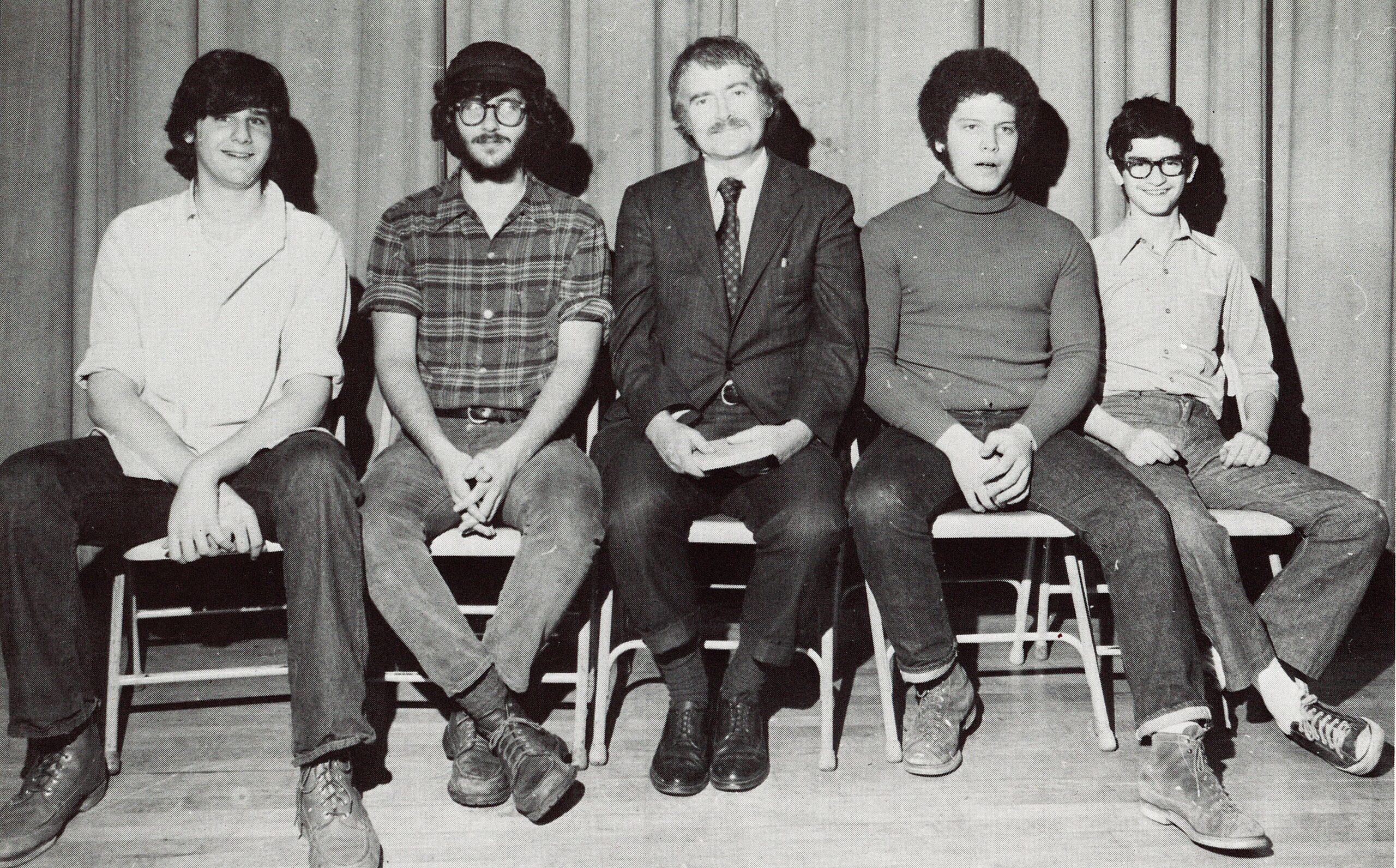
Nearly sixty years later, another transformation arrived. The 1973–74 school year ushered in sweeping reform: a new constitution written by Secretary Toni Fitzpatrick ’75, a new name—the Student Union—and a new vision for student representation. Under the leadership of President David Goldsmith ’74, Vice-President Daniel Oreskes ’74, and Treasurer Joseph Ciappina ’74 the emphasis shifted to a powerful student Senate, with a representative from every homeroom. For the first time, issues from the school budget to sexism, gym access for girls, attendance policies under Principal Fabbricante, and the boom in student productions were debated openly and decided collaboratively. That year’s Indicator noted the SU had become “a realistic, responsible, and forceful voice for the students.”
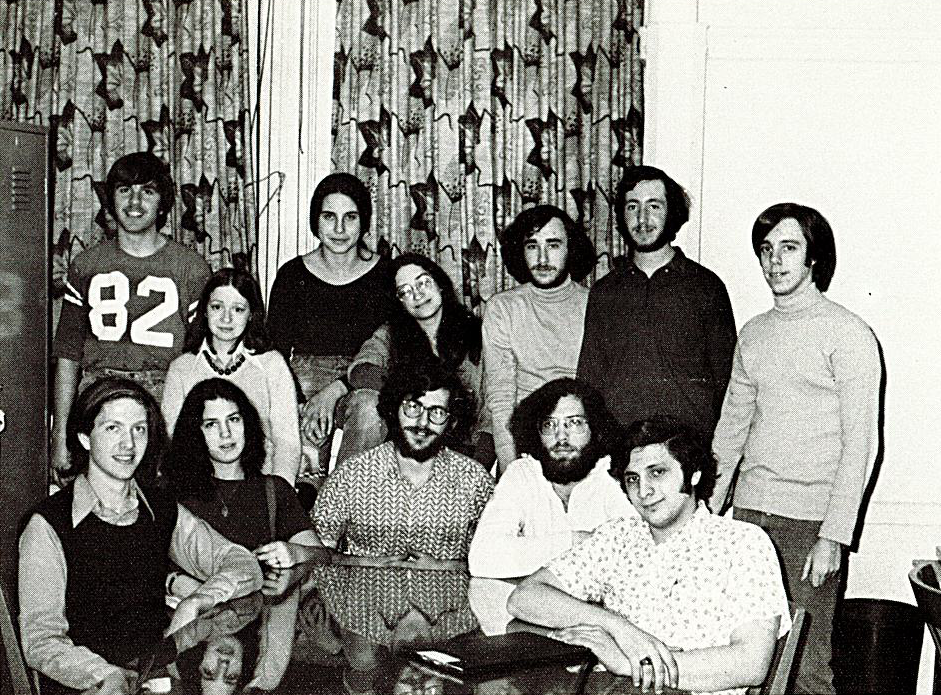
This revitalization coincided with Stuyvesant’s biggest transformation of all: after more than six decades as an all-boys school, the first girls were admitted in 1969. Their arrival reshaped school culture, academic life, and the student government itself. Today, the past three Student Union presidents have been diverse young women, a testament to how profoundly Stuyvesant has changed—and how central the SU has become in elevating student leadership across gender, background, and identity.
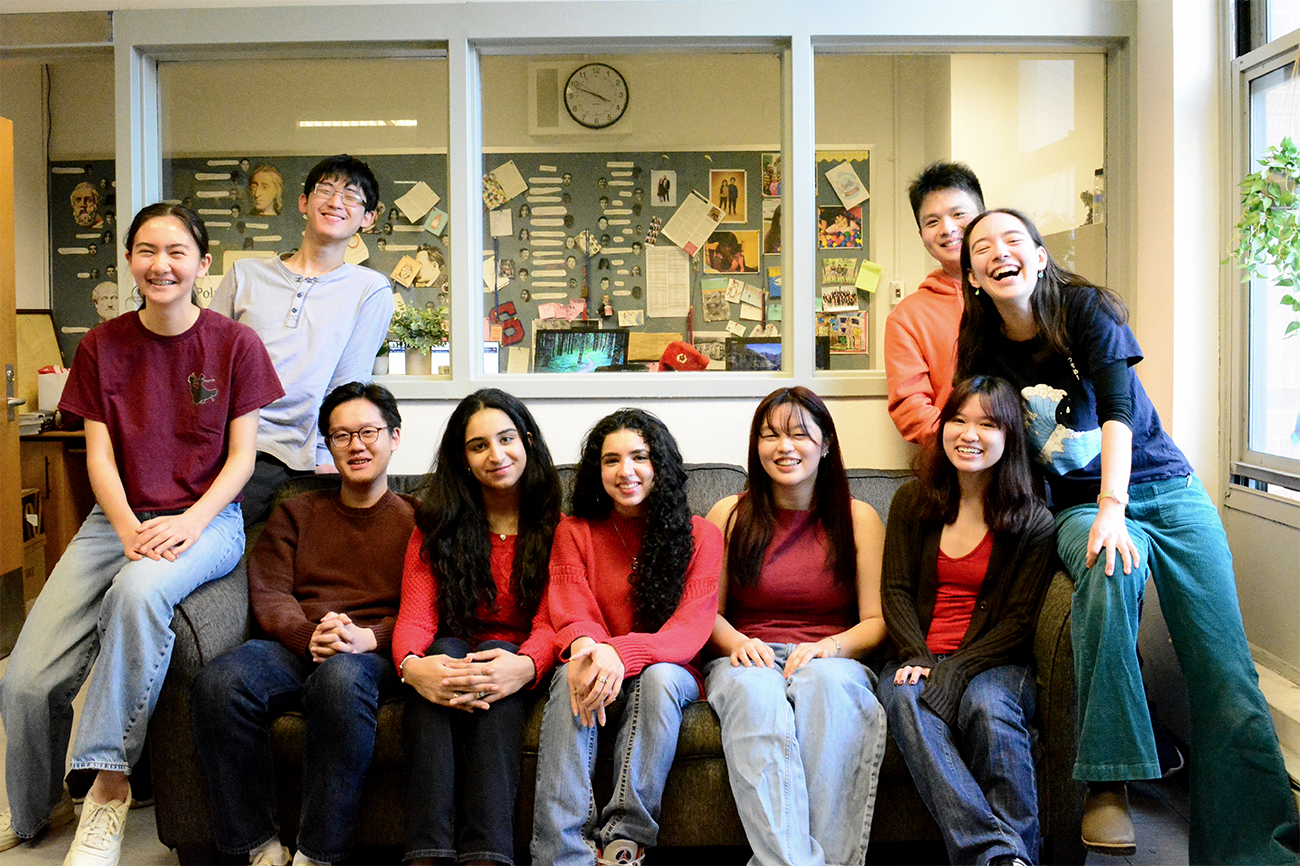
The modern Student Union of 2025 is more sophisticated than its founders could have imagined. Organized into departments ranging from Budget, Events, Externals, and Social Media to Graphics, IT, and the School Leadership Team, the SU supports hundreds of clubs and activities while advocating for academic resources, mental health supports, and schoolwide traditions like SING! and Clubs & Pubs. It is, as the SU describes, “a dynamic, fast-paced, and deeply rewarding journey,” one that gives students real experience in governance, teamwork, and community-building.
In the following section, we hear from three recent SU presidents whose reflections capture the purpose, challenges, and promise of student leadership at Stuyvesant today.
Leading the Modern SU: Voices From Today’s Student Union Presidents
The evolution of student government at Stuyvesant has always been driven most powerfully by the students themselves. In speaking with three recent Student Union presidents—Amanda Cissé ’24, Madeline Goodwin ’25, and current SU President Cayla Chew ’26—a picture emerges of an organization that is far larger, more complex, and more essential than at any other point in its 110-year history.
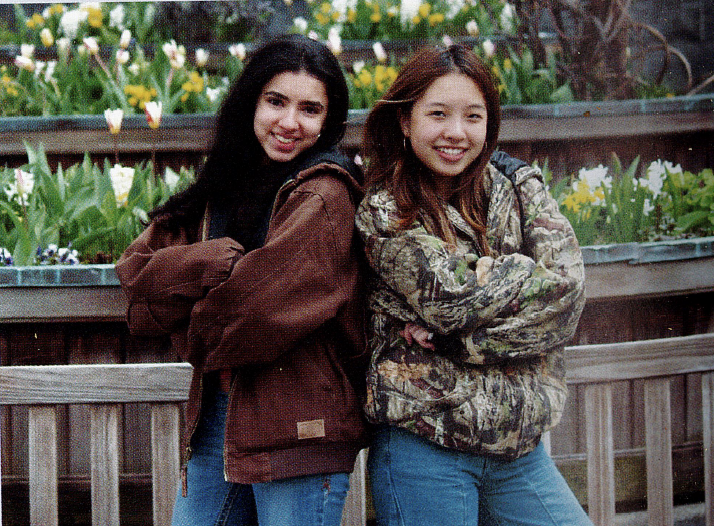
I wanted to innovate — not just follow what every president before me did. Amanda Cissé ’24
For Amanda Cissé ’24, leading the Student Union meant more than running an established system—it meant reshaping it. “I tried very hard to be very intersectional with that role,” she explains. “I knew that being SU President and Black Students League (BSL) President created unique opportunities for racial equity in the school.”
Amanda entered office determined to push past the mindset of we’ve always done it this way. She saw the SU not merely as a caretaker of traditions but as a sprawling, student-run organization requiring real management—project planning, delegation, communication, and oversight of hundreds of clubs. Budgeting, she says, was among the most complex responsibilities, with funding requests constantly shifting and DOE regulations adding layers of difficulty.
One of her signature reforms was redesigning BooGrams, transforming what had long been a chaotic, exhausting three-day scramble into a more predictable and equitable system. At every turn, she aimed to “innovate within existing traditions and introduce new projects where possible.”
Her leadership also had symbolic weight. As both SU President and BSL President, Amanda collaborated with Dr. Wilson of the College Office to lead Race in the Classroom professional development for staff—an initiative that reached thousands of students. “I’m proud to have been one of the few Black students admitted each year and to have been President of Stuyvesant,” she reflects. “It shows what Black students can do when they have equitable access.”
Madeline Goodwin ’25: A Focus on Outreach, Communication, and Partnership
While her full profile appears elsewhere in this issue, Madeline Goodwin ’25 helped steer the SU through a period of rapid expansion in communication channels and student engagement. “My main focus was connecting students with resources and opportunities,” she notes, emphasizing the SU’s role in making sure “students’ voices were heard and their experiences enriched.”
She describes a deliberate shift toward multi-platform outreach—emails, morning announcements, and increasingly sophisticated social media—to meet students where they are. As the SU continued to manage fundraising, allocate funds, and collaborate with DOE-regulated processes, her Presidency relied heavily on partnership with administrators: “The administration is very willing to listen to student ideas, which makes it feel like a partnership.”
Cayla Chew ’26: A New Generation of Leadership
As the SU marks its 110th year, current President Cayla Chew ’26 brings a vision shaped by both modern tools and enduring challenges. “My main job is basically to be a liaison between the student body and the faculty and administration,” she explains. “Communicating their wants and needs, and making sure we maximize our fellow students’ experience.”
For Cayla, communication is the backbone of the modern SU. Outreach has expanded dramatically through social media, complemented by weekly emails and morning announcements to keep the school informed. The SU now operates through a series of specialized departments—Outreach/Social Media, Budget, Graphics, Events, Clubs, and IT—each managing a different slice of campus life.
The Clubs Department alone oversees more than 200 clubs, maintaining a digital 3D “Clubs & Pubs” map to help students explore their options. The IT Department runs the expanding Epsilon platform, now shared across clubs, publications, elections, and more.
Caucuses continue to play a distinct role, handling grade-specific events while operating under the same faculty advisor. Cayla describes the SU as deeply involved in school-wide policy conversations—from cell phone regulations to gender-related policies—bringing student perspectives into decision-making spaces like the School Leadership Team (SLT).
Her Presidency has also been hands-on: coordinating food donations in response to DOE meal-funding cuts, supporting the Student Research Conference, designing Teacher Appreciation gifts, and even managing calligraphy for 800 diplomas ahead of graduation. She emphasizes efficiency and transparency: “We coordinate with other organizations to ensure funding is used responsibly, avoid duplication, and support a variety of student activities and events.”